
What children's hands tell us about their science thinking

Ever noticed your hands start moving when you explain something tricky to a child? You're not alone, and it isn't just a habit.
Over the last twenty years, research has shown that the gestures we make when we explain ideas are closely tied to the way we think. They can give us a window into understanding that isn't yet in words. This is the heart of what's called Embodied Learning.
In the Move2Learn project we looked at this with young children. Working with six science centres in the UK and the US, more than 500 children aged 3 to 8 played with science exhibits, from water tables to large digital installations, and then told us what they had found out.
A few things stood out. Children hardly gestured while they were playing, apart from pointing things out to each other. But when we asked them to explain afterwards, more than half did. With the younger children, the gesture often came before the words.
Children also picked up gestures from each other, and from the adults around them. When one facilitator tilted their forearm to show a balance board tipping, the children later used exactly the same movement in their own explanations.
A gesture can show us what a child understands before they have the words for it.
This matters in the classroom. If we only listen for the right vocabulary, we can miss what a child already knows. Asking a child to "show me" gives them another way in, especially children who find it hard to put ideas into words.
We should be careful not to overstate this. Our studies took place in fairly controlled settings, and there is still a lot we don't know about why some children gesture and others don't. But the teachers we've worked with see the same thing we do: gesture is a simple, free tool that is already in every classroom.
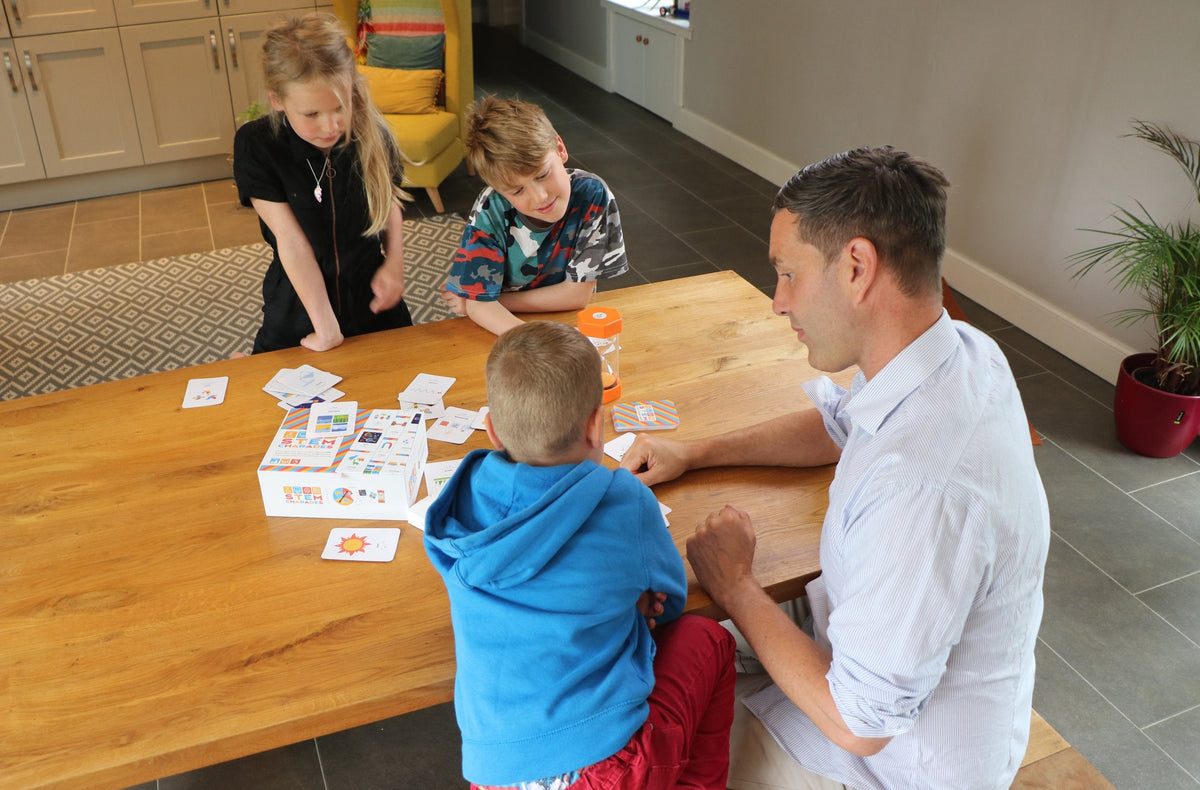
That is where STEM Charades came from. The game grew out of workshops with primary teachers, as a way to make gesture a normal part of talking about STEM ideas.

About Andrew
Andrew Manches is Professor of Children and Technology at the University of Edinburgh. He taught in infant and special education classrooms before moving into research, and created STEM Charades during the Move2Learn project.
More about the research behind STEM Charades

